

A traditional ceremony carries protocol that exists long before any production company gets involved — an order of proceedings, roles, and regalia that mean something specific to the families and communities taking part. Staging it well means building a production around that meaning, not fitting it into a generic event template that happens to have the right number of chairs.
PROTOCOL COMES BEFORE PRODUCTION DESIGN
Before we plan staging or lighting, we sit with the family or institution leading the ceremony to understand the actual order of events — who plays which role, what can and cannot be adjusted for time, which moments are non-negotiable and which have some flexibility. The run of show is built to protect that order, not to compress it into a standard template that would be easier for us to produce. This conversation often takes longer than the production planning that follows it, and that’s by design.
REGALIA AND MATERIAL CULTURE NEED SPECIALIST HANDLING
Coral beadwork, ceremonial staffs, traditional attire, and other regalia are frequently heirlooms, not props — objects with their own history, sometimes passed through several generations of a family. Sourcing, transport, and on-site handling of these pieces gets planned with the same care as a museum object, because for many of the families we work with, that’s exactly what they are. This means dedicated transport arrangements, secure storage on-site, and a handling plan agreed with the family in advance — not general prop management extended to cover something far more significant.
THE AUDIENCE IS PART OF THE CEREMONY, NOT JUST WATCHING IT
Processions, call-and-response, and guest participation are structural parts of many ceremonies, not spectacle added for visual effect. Staging has to make room for the audience to actually take part where tradition calls for it — which changes how we think about seating, sightlines, and pacing compared to a purely spectator-facing production. A seating plan that keeps guests too far from a procession route, for instance, can quietly undermine a moment that was meant to involve them directly.
TIME MOVES DIFFERENTLY IN CEREMONIAL PRODUCTIONS
A concert run of show is built around tight timing — segments hit their marks to the minute. Ceremonial productions often need to move at the pace the ceremony itself demands, which isn’t always predictable in advance. A blessing, a procession, or a family moment may simply need the time it needs. We build buffer into ceremonial run sheets specifically to protect this — enough flexibility that the ceremony can breathe without the whole day’s schedule collapsing if one segment runs long.
WORKING ACROSS DIFFERENT TRADITIONS
Every family, region, and tradition carries its own specific protocol, and we don’t assume one ceremony’s structure applies to another. A Yoruba ceremonial staging and a Hausa royal durbar have entirely different sequences, roles, and material culture, even though both are, broadly, traditional Nigerian ceremonies. Understanding that specificity — rather than defaulting to a generalized template — is part of what protocol-first planning actually means in practice.
BRIEFING A CREW THAT ISN’T FAMILIAR WITH THE TRADITION
Not every crew member on a large ceremonial production comes from the same cultural background as the family hosting it, and that’s not a problem in itself — but it does mean protocol has to be actively briefed, not assumed. Before any ceremonial production, we run a dedicated briefing covering what each role in the ceremony means, what physical contact or proximity is and isn’t appropriate around regalia and key participants, and where crew need to stay entirely out of frame or out of the procession path. A crew that understands why a moment matters handles it with noticeably more care than one that’s simply been told where to stand.
WHEN TRADITION AND MODERN PRODUCTION NEEDS MEET
Occasionally a genuinely modern production requirement — a specific camera angle for livestreaming, a particular microphone placement — sits in tension with how a ceremony has traditionally been staged. These moments need a real conversation with the family or institution involved, not a production team quietly deciding on their behalf. Where a compromise is possible, we find one; where it isn’t, the ceremony’s protocol takes precedence over the production convenience, every time.
DOCUMENTING A CEREMONY RESPECTFULLY
Photography and videography at a ceremonial production need their own protocol conversation — which moments can be documented, which are private even within a public celebration, where a photographer can and cannot physically stand during a procession. We agree this with the family directly rather than assuming standard event photography conventions apply, because a documentation team unaware of these boundaries can unintentionally intrude on a moment that was never meant to be captured from that angle, or at all.
WHY WE VISIT THE FAMILY BEFORE WE VISIT THE VENUE
On most productions, the venue site visit happens early because it shapes so much of the practical planning. On ceremonial productions, we deliberately sit with the family or institution first, before the venue walkthrough — because understanding the protocol properly sometimes changes what venue even makes sense, or reveals a requirement that has to be checked against the space before anything else is finalized. Getting this sequence right avoids planning a venue-first production and then discovering, late, that the ceremony’s protocol doesn’t actually fit the space that was already booked.
PLANNING TIMELINES FOR CEREMONIAL PRODUCTIONS
Ceremonial productions often need a longer planning runway than their guest count alone would suggest, because so much of the early work is relational rather than logistical — building trust with a family, understanding protocol in genuine depth, sourcing regalia that may need to be commissioned or carefully located rather than simply ordered. We treat the protocol conversation as its own phase with its own timeline, separate from and usually preceding the production planning that follows it, rather than compressing both into a single generic pre-event schedule.
GUEST COORDINATION IS PART OF THE CEREMONY, NOT JUST HOSPITALITY
Where guests sit, when they’re seated relative to the ceremony’s key moments, and how they’re guided through unfamiliar protocol if they’re not from the same cultural background as the hosts, all shape whether a ceremony feels cohesive or scattered. We brief front-of-house and hospitality staff on ceremonial protocol specifically, not just general event service standards, so a guest asking a simple question mid-ceremony gets an answer that respects what’s actually happening, rather than a generic response from someone unfamiliar with the occasion.
WHAT HAPPENS WHEN A CEREMONY RUNS INTO A RECEPTION
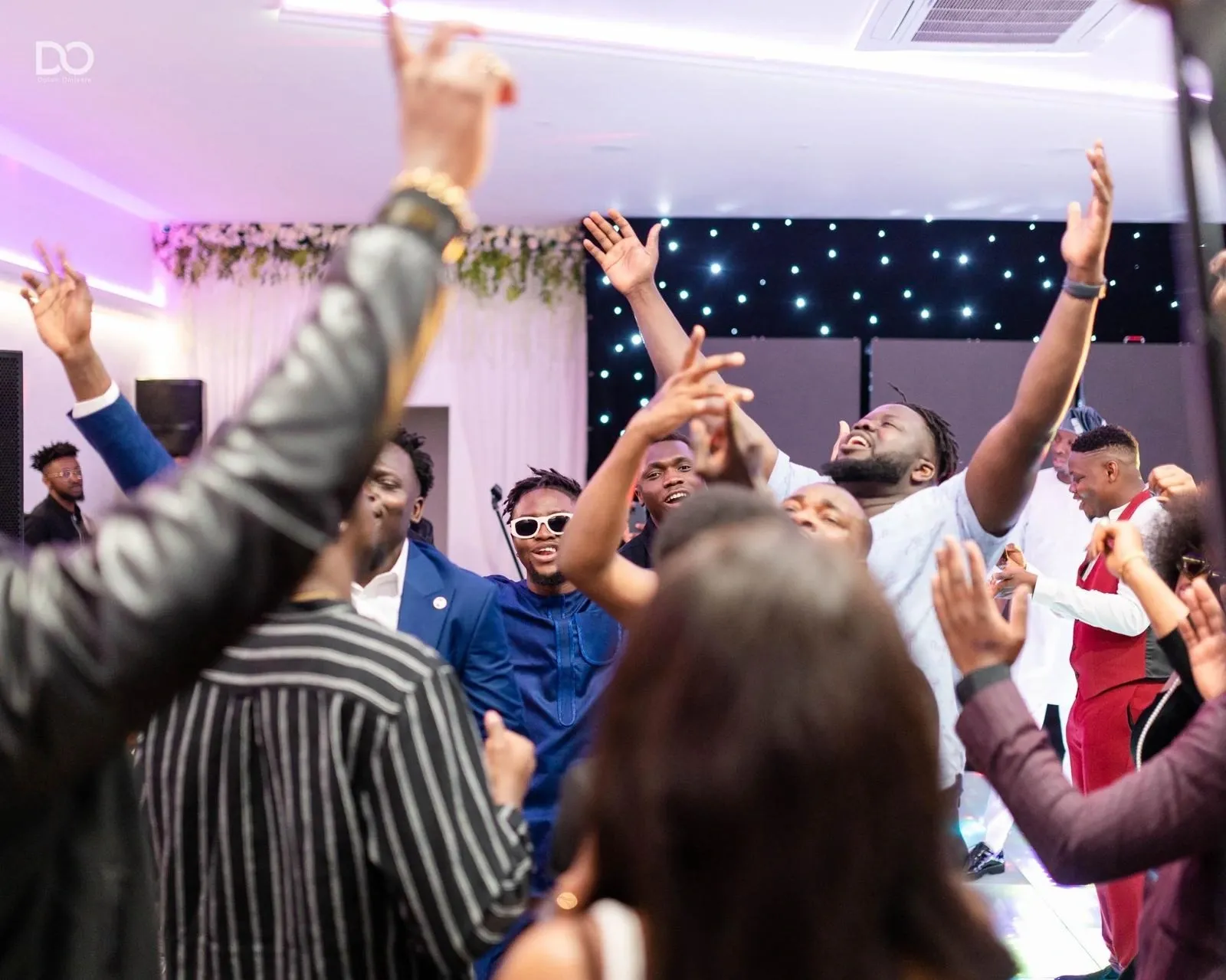
Many ceremonial productions transition directly from a formal ceremony into a more contemporary celebration — a reception, a banquet, live entertainment that follows a very different register to the ceremony itself. That transition needs its own careful staging: a clear signal that the formal proceedings have concluded, a shift in lighting, sound, and pacing that guests can feel without it being jarring, and a production team that treats the handover between these two very different moods as a planned moment in its own right, not an afterthought once the “main event” is over.
PLANNING A CEREMONIAL PRODUCTION?
Ceremonial & Cultural Showcases is the discipline built specifically around this — ceremonial staging and protocol, regalia sourcing, and guest coordination handled with the precision the occasion demands, starting with a conversation about what the ceremony means before a single production decision gets made.